Tag: tefillah
-
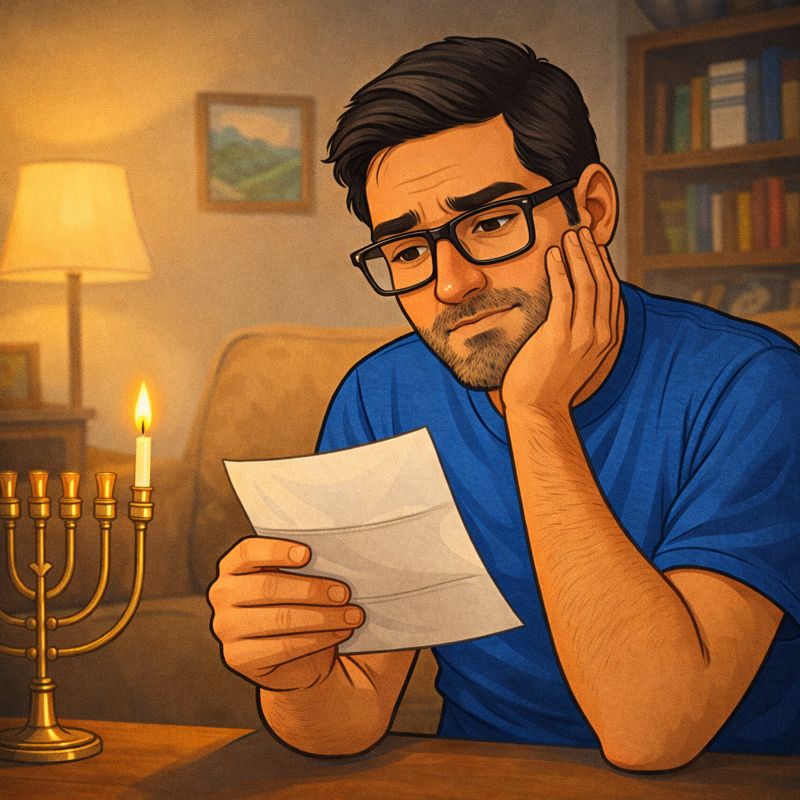
What I Found When I Opened a Letter I Wrote to Hashem Last Year On the first night of Chanuka this year, I opened a sealed envelope that had been sitting in my living room for a full year. I wrote it on the last night of Chanuka last year. I honestly didn’t remember what…
-

You can be doing everything right… and still feel completely empty inside. You can be doing everything right… and still feel completely empty inside.I know because I lived it. And recently in Yerushalayim, a young man came to my table with a question that hit me so deeply it brought everything back — the numbness,…
-
Yaakov Avinu is finally returning home… Yaakov Avinu is finally returning home after twenty years in Lavan’s house. He has a family, wealth, and—most importantly—a clear promise from Hashem that He will protect him and bring him safely back to Eretz Yisrael. And then, just before the reunion with Esav, the Torah describes him with…
-
Yaakov and Eisav enter the world together… Yaakov and Eisav enter the world together, yet their lives grow in opposite directions. Yaakov sees the spiritual as a way to serve Hashem. Eisav sees the physical as the goal itself. When they meet, Eisav says, “Yesh li Rav” — I have a lot, but “a lot”…
-
“Vayeitzei Yaakov.” Rashi asks why the Torah mentions the leaving when we already know he’s going to Charan. Because when a tzadik leaves, the spiritual atmosphere shifts. His presence lifts the city, and when he’s gone, people feel the loss. If one tzadik’s departure creates a void, imagine the impact of all of Klal Yisrael…
-
The parsha begins with Noach ish tzaddik and ends with Avraham ha’chasid.Two righteous men. Two ways of serving Hashem. One preserved the world; the other began to redeem it. “Noach was a tzaddik, perfect in his generation.” Rashi teaches that some praise him for staying righteous amid corruption, while others say that beside Avraham, he…
-
Before a single flower bloomed or tree grew, the world was already filled with hidden potential—waiting. The grass was beneath the surface. The seeds were in place. But nothing sprouted. Why? Because there was no man to pray for it.Rashi explains that Hashem withheld rain because there was no one to recognize the blessing it…
-
Parshat Matot opens with a curious halacha: vows. If a Jew says something like “I won’t eat bread today,” it becomes halachically binding. Words alone create new spiritual realities. No action, no ritual—just speech. That’s the power Hashem gave us. It mirrors the opening of the Torah itself: “Vayomer Elokim—Yehi or.” Hashem spoke—and light came…
-
Most of us think we’re stuck.We don’t see change. We don’t feel growth.We’re doing the same things, facing the same struggles… and wondering:“Am I even moving forward?” But Hashem sees something you don’t:You’re not stuck. You’re leveling up. Growing up with my siblings, I never noticed myself getting taller. None of us did. We were…
-
What Korbanot, Birkat Kohanim, and Shmoneh Esrei Teach Us About Showing Up With Kavana Sometimes, I catch myself in the middle of Shmoneh Esrei and realize… I’m not even there. I said the words. I bowed in the right places. I even remembered to pause before Modim. But my head? Somewhere else entirely. And yet…