Tag: Emunah
-

Parshat B’Shalach Gives You a Picture of Bitachon You Can Actually Live Parshat B’Shalach gives you a picture of bitachon you can actually live. Because right after the miracles, right after the Shira, Hashem introduces a strange system called the maan. And it is not only food. It is training. The Desert Was Hashem’s “Abundance…
-

Chazal describe Bnei Yisrael in Mitzrayim as being at the edge, almost beyond saving. Bnei Yisrael was on the “49th level of tumah.” The point is not the number. The point is the closeness to the cliff. And then something unbelievable happens. A nation that could barely lift its head becomes a nation ready to…
-
Mechakeh, The Waiting That Changes You There are different levels of bitachon. A person can believe in Hashem. A person can hope. A person can lean on Him. But the Rambam’s formulation (as we say in Ani Ma’amin) points to a higher level, a sharper, more alive stance: “Achakeh.” Achakeh does not mean “I know…
-
There’s a Famous Gemara… There’s a famous Gemara: Rabbi Yehoshua ben Levi meets Eliyahu HaNavi and asks him, “When will Mashiach come?” Eliyahu tells him, “Go ask him.” Rabbi Yehoshua ben Levi asks, “Where can I find him?” Eliyahu answers: “At the gates of Rome, sitting among the poor and afflicted.” Rabbi Yehoshua ben Levi…
-
Two “New Pharaohs” There are two “new Pharaohs” in Parshat Shemot. The first is obvious: a new king rises who “doesn’t know Yosef,” and the darkness begins. But the second is quieter: Pharaoh dies… and the slavery still doesn’t loosen its grip. Bnei Yisrael cry out again, and this time Hashem “hears,” “remembers,” and redemption…
-
Parshat Vayechi opens with Yaakov Avinu doing something deeply personal. Before he dies, he gathers his sons and gives each one a different bracha. Not because he loved some more than others, but because he knew each one. He saw their nature, their struggles, and what each one would need to fulfill his unique mission.…
-
Yaakov hears the impossible: Yosef is alive. Not only alive, but ruler of Mitzrayim. If we were there, we’d ask one question immediately: How? Who did this? What happened to my son? But the Rashbam points out something shocking: the brothers never told Yaakov how Yosef ended up in Mitzrayim, and Yaakov doesn’t force it…
-
Why Geulah Is Hard to Believe — Until It Isn’t At every moment of redemption in Jewish history, the pattern is strikingly consistent: first disbelief, and only afterward recognition. Not because the facts are unclear, but because the heart cannot absorb hope so quickly. When Yosef’s brothers returned and told Yaakov the impossible — that…
-
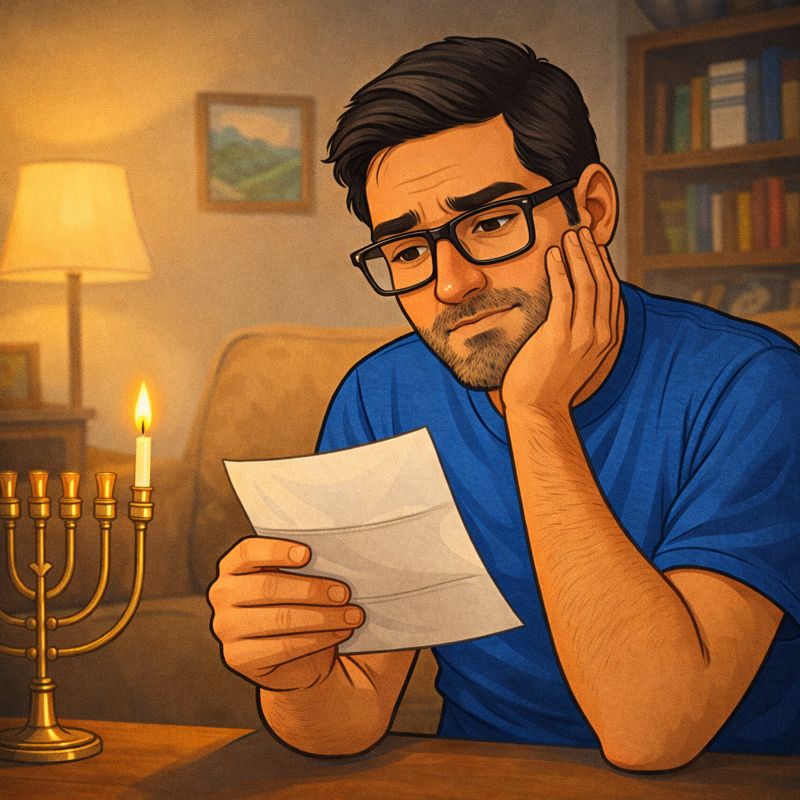
What I Found When I Opened a Letter I Wrote to Hashem Last Year On the first night of Chanuka this year, I opened a sealed envelope that had been sitting in my living room for a full year. I wrote it on the last night of Chanuka last year. I honestly didn’t remember what…
-
When we look at Yosef’s life in Parshat Vayeshev, he almost seems superhuman. Sold by his own brothers. Taken to a foreign country. Forced into slavery. Thrown into prison for a crime he didn’t commit. Anyone else would collapse under the weight of it all. Yet Yosef stays steady. The Torah doesn’t describe anger, despair,…